

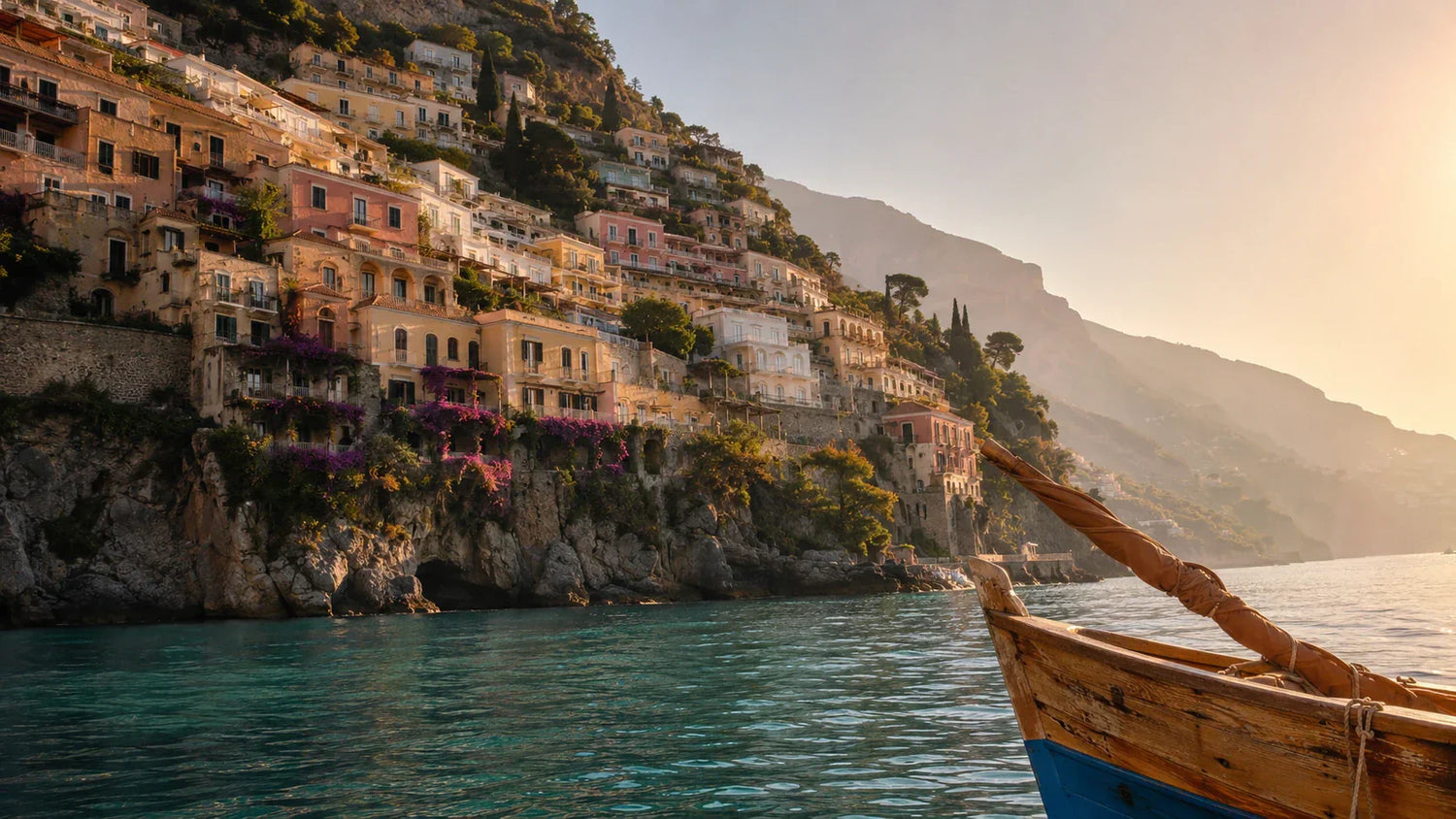
The Italian coast has shaped how the world thinks about summer eyewear for sixty years. Capri in the 1950s, Portofino in the 1960s, Amalfi and Positano through the 1970s — each decade put a different silhouette on the map.
Which Italian regions defined coastal eyewear style?
Amalfi and Sorrento (Campania)
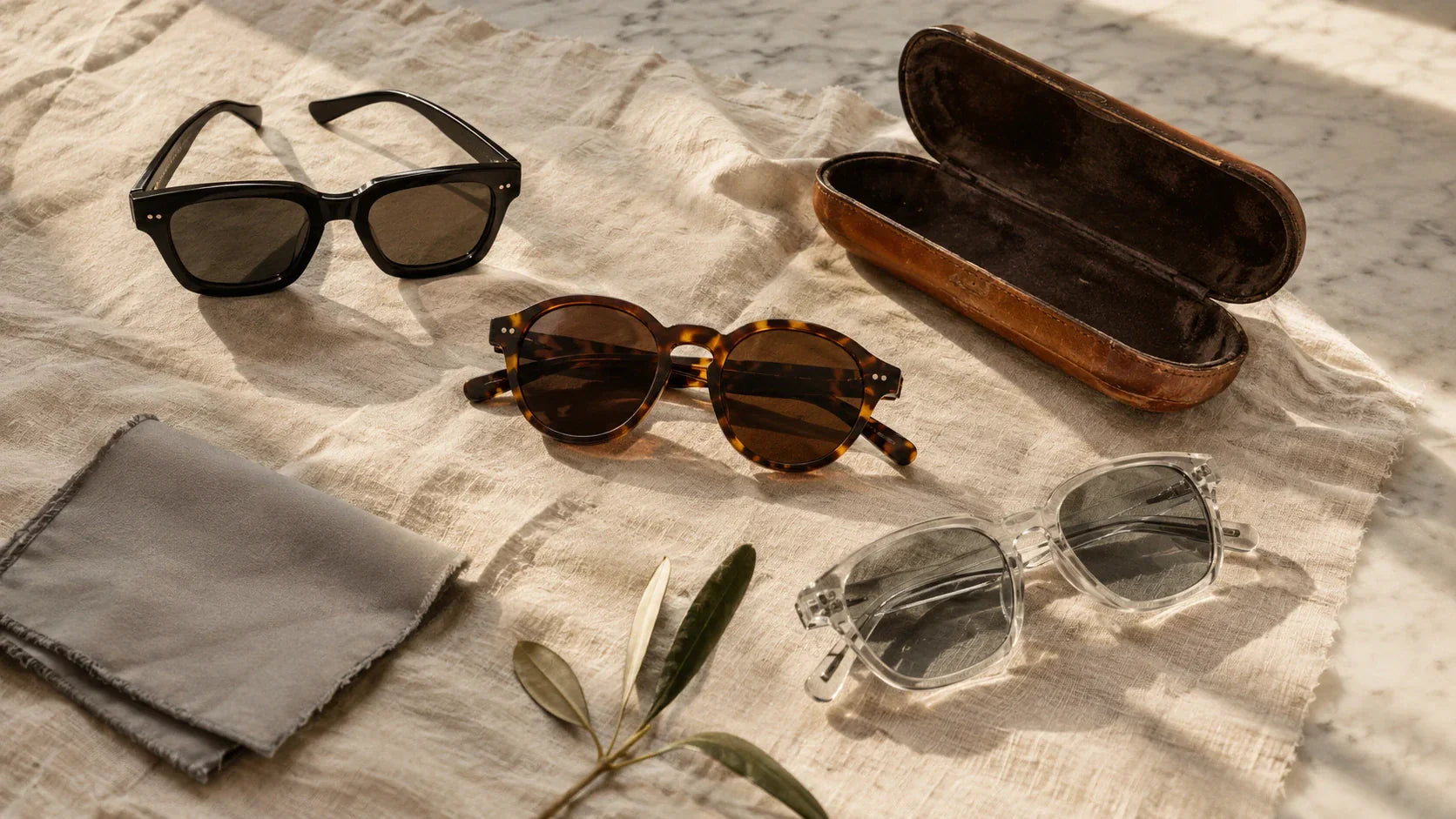
The Amalfi coast set the template for postwar Italian glamour. Think Jackie Kennedy in Ravello, summer 1962. The defining frames were oversized rounds and large rectangulars — Italian acetate in tortoise and amber, with dark green or grey lenses that worked under intense Mediterranean light.
Capri
Capri's most cited eyewear moment is Curzio Malaparte himself, at the cliffside Casa Malaparte he built in 1942 — wearing round acetate frames that became a quiet uniform among the architects and writers who visited him there.
Cinque Terre and Liguria
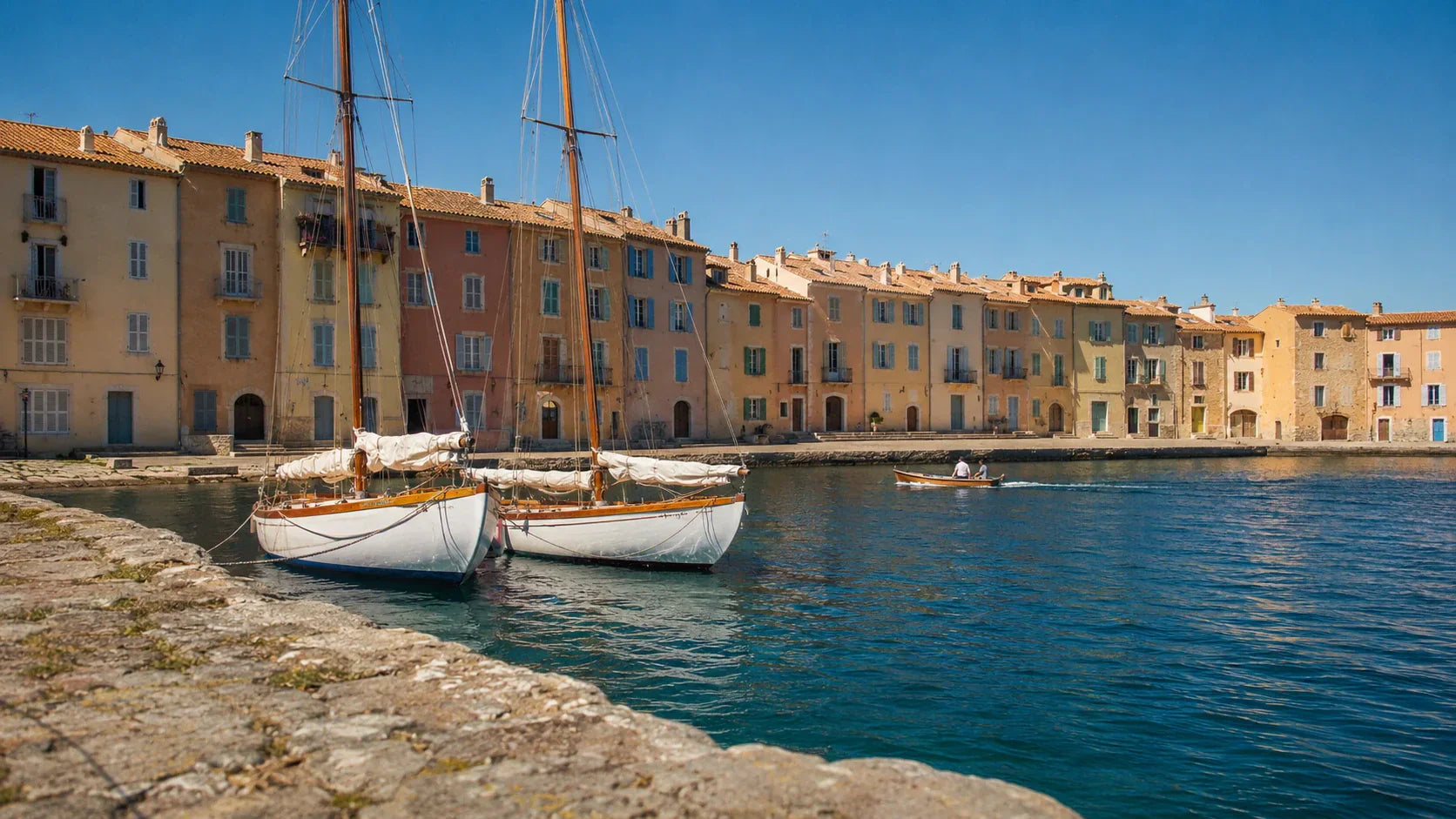
Liguria — Portofino, Bordighera, Sanremo, Cinque Terre — favours a quieter, more architectural eyewear language. Small to medium round metal frames in the style of Italian Belle Époque (1890-1914).
Sardinia (Costa Smeralda)
Costa Smeralda was developed in the 1960s as a discreet alternative to St. Tropez. Hexagonal aviators in light metal, often with mirrored lenses, designed to cut glare off the water.
Sicily (Taormina)
Sicily's eyewear identity is wayfarer-adjacent — rectangular acetate frames with a slight cat-eye lift, often photographed in 1950s cinema (Antonioni, Visconti).
How do you choose Italian coastal sunglasses?
Three principles travel across all five regions:
- Acetate over plastic. Italian coast eyewear was built on solid Italian acetate (Mazzucchelli in Castiglione Olona supplies most of the industry).
- Muted colourways. Tortoise (every variation), amber, smoke, deep green, slate, soft champagne. Bright colours appeared in the 1980s but never became canonical.
- Polarised lenses. Italian summer light is intense and reflective — polarisation cuts glare from water, white walls, marble piazzas. All HARO sunglasses are polarised UV400.
What are the best Italian coast sunglasses to start with?
Five frames from The Amalfi Selects:
- Capri Malaparte — browline silhouette in acetate and metal, the most direct nod to the Malaparte uniform.
- Sorrento Grand Tour — hexagonal aviator in metal, light enough for full-day wear.
- Ravello Infinity — round acetate frame inspired by the oversized rounds Ravello visitors wore through the 1960s.
- Sanremo 1947 — small Belle Époque round, in keeping with the Ligurian language.
- Taormina 1955 — Sicilian wayfarer in acetate, the most versatile shape in the collection.
What do you wear with Italian coast sunglasses?
Italian coast eyewear lives best with simple, undecorated clothing. Linen shirt unbuttoned at the collar. Cotton trousers in cream or stone. Leather sandals or canvas espadrilles. A straw hat if the sun calls for it.
For evening, the same frames work with a navy or off-white linen jacket, a knit polo, and loafers. The Italian rule: don't change the eyewear when you change the clothes. The pair you wore at lunch should still be on at aperitivo hour.
Quick reference: HARO Amalfi Selects collection
- Frames in collection: 16 sunglasses.
- Geographical references: Amalfi, Positano, Capri, Sorrento, Cinque Terre, Portofino, Sardinia, Sicily, Liguria.
- Shapes available: round, oval, rectangular, square, hexagonal, browline, aviator, wayfarer.
- Materials: Italian block acetate, polished metal, or both combined.
- Lens technology: Polarized polycarbonate, UV400 (100% UVA/UVB).
- Price: USD 59 per pair. Same price across all 16 models.
- Shipping and returns: Free worldwide shipping on orders over USD 65 or 4+ items. 14-day returns.
For the broader framework on how to choose sunglasses that age well, read our pillar guide: Quiet Luxury Sunglasses: A 2026 Buyer's Guide.

Leave a comment
This site is protected by hCaptcha and the hCaptcha Privacy Policy and Terms of Service apply.